
The Origin and True Meaning of Haṭhayoga
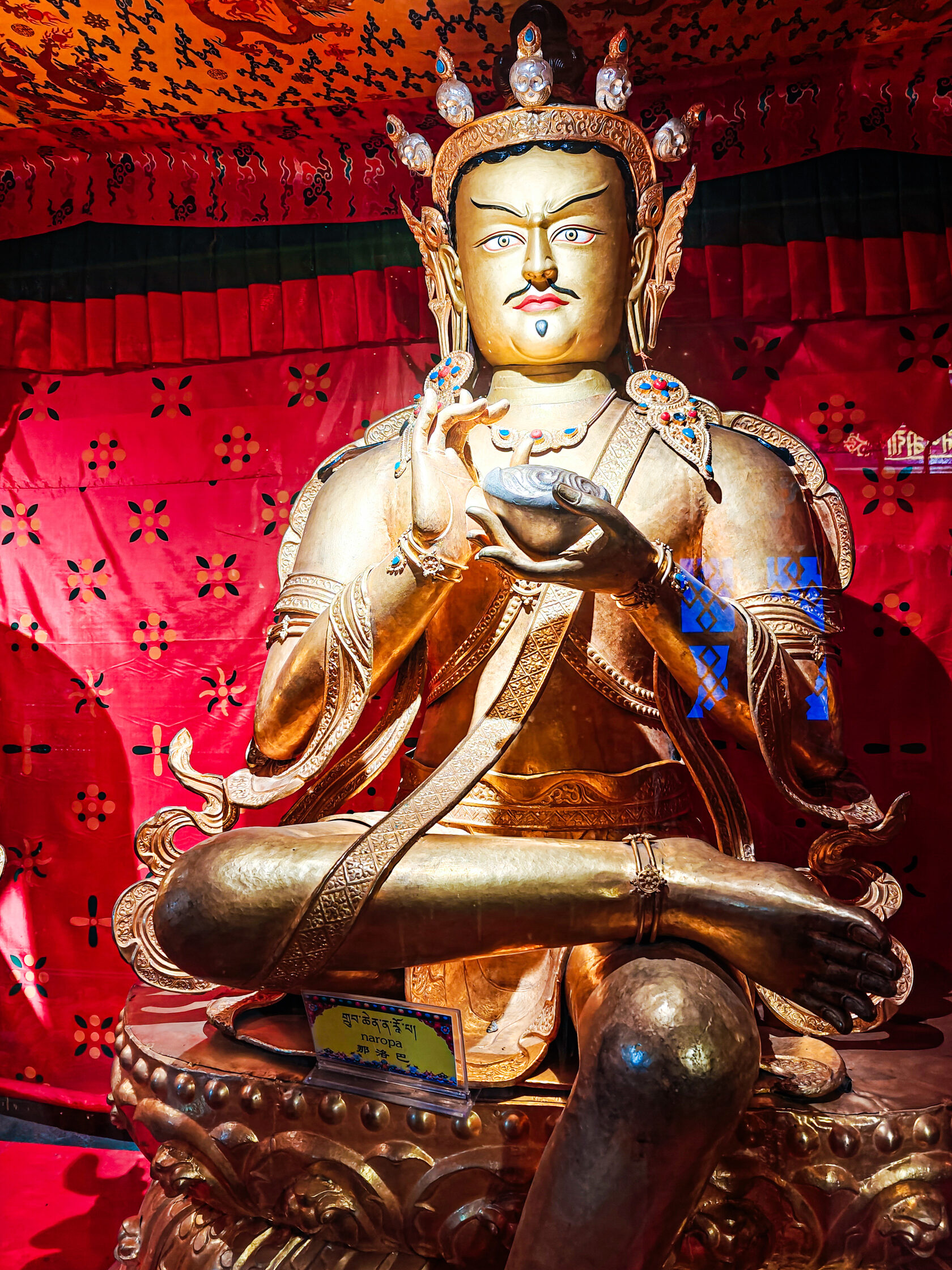
The earliest documented reference to haṭhayoga is found in the 8th-century Buddhist Guhyasamājatantra, specifically in verses 161–163 of Chapter 18 (Samājottaratantra). It states that if a practitioner of ṣaḍaṅgayoga does not attain the visionary experience (darśana) leading to realization after three attempts of six months each, he should resort to haṭhayoga (Tib. stobs kyi rnal ’byor)—a forceful method that is said to lead to awakening (bodhi) and the perfection of knowledge (jñānasiddhi).
Nāropa (956–1040), Paramārthasaṃgraha, citing Laghukālacakratantra, IV.119 and IV.196–197; Vimalaprabhāṭīkā, IV.119.
Now haṭhayoga (Tib. btsan thabs kyi rnal ’byor / stobs kyi rnal ’byor) is explained as follows:
Here, when the Immutable Moment (akṣarakṣaṇa) does not arise because the vital breath (prāṇa) is not under control, even though the image is perceived through the process of sensory withdrawal (pratyāhāra) and the other stages, at that moment the yogin, by practicing the inner sound (nādābhyāsa) and forcefully directing the vital breath into the avadhūtī (the central channel associated with supreme realization), realizes the Immutable Moment through stillness (niḥspanda), while arresting and retaining the seed of bodhicitta (bodhicittabindu) at the center of the Vajra Jewel Chakra (vajramaṇicakra) located within the Lotus of Wisdom. This is haṭhayoga.
[Vajra-maṇi-cakra literally means “the Vajra Jewel Chakra,” that is, the center of the indestructible union of method and wisdom.
The Chakra of the Indestructible Jewel, the Vajra Jewel Chakra,
vajra gem chakra generally refers to the chakra in the genital region (the lower center), associated with the vajra union (yogic union) and bindu (the seminal drop), that is, the place of conjunction and retention of bodhicitta.
In the texts of the Kālacakra and Amṛtasiddhi traditions, this center is most often identified with the lower chakra (mūlādhāra or “foundation”)—the genital region.
This center is the abode of the bodhicitta-bindu (the seminal drop), the life-energy that unites with the fire of caṇḍālī (gtum mo) rising from the navel.
In the Amṛtasiddhi and the commentaries of Amoghavajra and Nāropa, this term denotes:
“The place where the masculine and feminine principles unite;
where bodhicitta (bindu) is retained,
and where the ‘Immutable Moment’ (akṣarakṣaṇa, vajrakṣaṇa) is realized.”
In the Kālacakratantra (Chapters IV–V), vajra-maṇi-cakra also denotes:
the lower energetic center, the birthplace of bodhicitta,
that is, the genital chakra, sometimes called nirmāṇacakra—the “chakra of manifestation (emanation).”]
The practice of the inner sound (nādābhyāsa) is described as follows:
The energy [prāṇa] (śakti; Tib. nus ma) rises from the navel center to the supreme abode (parāpada; Tib. gzhan gyi gnas su) [...]. It comes to rest at the navel chakra and, like a shining lightning bolt in the shape of a staff, moves smoothly and with trembling oscillations along the avadhūtī, passing from one chakra to another until it forcefully pierces the opening of the uṣṇīṣa, like a thorn piercing the skin. At that moment the yogin must draw the apāna (Tib. thur du sel ba) strongly upward into the [central] channel. As soon as both winds are arrested [within the avadhūtī], they break through the uṣṇīṣa and ascend to the supreme citadel (parāpura, Tib. mchog gi grong kher). Thus the yogin [...] becomes the universal mother of yogins (yogīnīṃ viśvamātā, Tib. rnal ’byor pa rnams dag gi sna tshogs yum), endowed with the five supernormal knowledges.
Caṇḍālī (gtum mo). Nāropa, Paramārthasaṃgraha (148–151), states:
Prāṇa, because it is the protector of the mind, is a person’s own mantra.
This prāṇa should be concentrated (contemplated) in the region of the navel and raised [from chakra to chakra] to the heart until it reaches the bindu—that is, the place where the bindu resides—the region of the forehead. There it should be stopped.
This jewel, accompanied by the sense faculties, must be arrested, that is, freed from movement back and forth. This is called dhāraṇā (concentration), the fourth limb (aṅga) [...].
Then this great jewel, once arrested—that is, rendered motionless through the stage of concentration—will cause the ascent of caṇḍālī from the navel chakra through the diamond path, the avadhūtī, toward the elements of the other, namely the head chakra. Then, emerging from the head chakra, it dissolves the syllable HAM, and having dissolved it, proceeds—in accordance with the four blisses (ānanda)—toward the Vajra Jewel Chakra.
Once caṇḍālī has been retained, it immediately ignites. Such is the teaching of the Masters.
Therefore, the yogin endowed with wisdom must ensure that bodhicitta is not emitted (not lost).
With the words “gradually realize the supreme motionless state,” the yogin should meditate upon the union of the two organs.
What the Lord Buddha intended to indicate is meditation on bliss, not the emission of bodhicitta.
This tendency toward emission is itself the nature of the afflictions that, since beginningless time, have bound living beings to saṃsāra.
Through union with the mudrā (wisdom consort), this tendency toward emission is transformed into a tendency toward non-emission—just as mercury and fire interact with one another.
Fire is the enemy of mercury.
Without fire, mercury can never be bound (bandhaḥ, Tib. ’ching ba).
Without binding, there can be no gold.
Without gold, the alchemist experiences no delight.
Likewise, without union with a woman, the binding of bodhicitta (cittabandhaḥ) cannot occur in the yogin.
If it is not bound (na baddhaḥ), the body cannot be pierced (vedha, from √vidh, Tib. ’bigs pa) or transformed.
Without bodily transformation (āvidha), the innate bliss (sahajānanda) is not bestowed here.
Laghukālacakra (IV.224)
Without union with a woman, the binding of bodhicitta in the yogin (bandhaḥ, Tib. ’ching ba) cannot occur.
If it is not bound (na baddhaḥ), the body cannot be pierced (vedha, Tib. ’bigs pa) or transformed.
Without bodily transformation (āvidha), innate bliss (sahajānanda) is not bestowed here.
Nāropa (956–1040), Paramārthasaṃgraha, citing Laghukālacakratantra, IV.119 and IV.196–197; Vimalaprabhāṭīkā, IV.119.
Now haṭhayoga (Tib. btsan thabs kyi rnal ’byor / stobs kyi rnal ’byor) is explained as follows:
Here, when the Immutable Moment (akṣarakṣaṇa) does not arise because the vital breath (prāṇa) is not under control, even though the image is perceived through the process of sensory withdrawal (pratyāhāra) and the other stages, at that moment the yogin, by practicing the inner sound (nādābhyāsa) and forcefully directing the vital breath into the avadhūtī (the central channel associated with supreme realization), realizes the Immutable Moment through stillness (niḥspanda), while arresting and retaining the seed of bodhicitta (bodhicittabindu) at the center of the Vajra Jewel Chakra (vajramaṇicakra) located within the Lotus of Wisdom. This is haṭhayoga.
[Vajra-maṇi-cakra literally means “the Vajra Jewel Chakra,” that is, the center of the indestructible union of method and wisdom.
The Chakra of the Indestructible Jewel, the Vajra Jewel Chakra,
vajra gem chakra generally refers to the chakra in the genital region (the lower center), associated with the vajra union (yogic union) and bindu (the seminal drop), that is, the place of conjunction and retention of bodhicitta.
In the texts of the Kālacakra and Amṛtasiddhi traditions, this center is most often identified with the lower chakra (mūlādhāra or “foundation”)—the genital region.
This center is the abode of the bodhicitta-bindu (the seminal drop), the life-energy that unites with the fire of caṇḍālī (gtum mo) rising from the navel.
In the Amṛtasiddhi and the commentaries of Amoghavajra and Nāropa, this term denotes:
“The place where the masculine and feminine principles unite;
where bodhicitta (bindu) is retained,
and where the ‘Immutable Moment’ (akṣarakṣaṇa, vajrakṣaṇa) is realized.”
In the Kālacakratantra (Chapters IV–V), vajra-maṇi-cakra also denotes:
the lower energetic center, the birthplace of bodhicitta,
that is, the genital chakra, sometimes called nirmāṇacakra—the “chakra of manifestation (emanation).”]
The practice of the inner sound (nādābhyāsa) is described as follows:
The energy [prāṇa] (śakti; Tib. nus ma) rises from the navel center to the supreme abode (parāpada; Tib. gzhan gyi gnas su) [...]. It comes to rest at the navel chakra and, like a shining lightning bolt in the shape of a staff, moves smoothly and with trembling oscillations along the avadhūtī, passing from one chakra to another until it forcefully pierces the opening of the uṣṇīṣa, like a thorn piercing the skin. At that moment the yogin must draw the apāna (Tib. thur du sel ba) strongly upward into the [central] channel. As soon as both winds are arrested [within the avadhūtī], they break through the uṣṇīṣa and ascend to the supreme citadel (parāpura, Tib. mchog gi grong kher). Thus the yogin [...] becomes the universal mother of yogins (yogīnīṃ viśvamātā, Tib. rnal ’byor pa rnams dag gi sna tshogs yum), endowed with the five supernormal knowledges.
Caṇḍālī (gtum mo). Nāropa, Paramārthasaṃgraha (148–151), states:
Prāṇa, because it is the protector of the mind, is a person’s own mantra.
This prāṇa should be concentrated (contemplated) in the region of the navel and raised [from chakra to chakra] to the heart until it reaches the bindu—that is, the place where the bindu resides—the region of the forehead. There it should be stopped.
This jewel, accompanied by the sense faculties, must be arrested, that is, freed from movement back and forth. This is called dhāraṇā (concentration), the fourth limb (aṅga) [...].
Then this great jewel, once arrested—that is, rendered motionless through the stage of concentration—will cause the ascent of caṇḍālī from the navel chakra through the diamond path, the avadhūtī, toward the elements of the other, namely the head chakra. Then, emerging from the head chakra, it dissolves the syllable HAM, and having dissolved it, proceeds—in accordance with the four blisses (ānanda)—toward the Vajra Jewel Chakra.
Once caṇḍālī has been retained, it immediately ignites. Such is the teaching of the Masters.
Therefore, the yogin endowed with wisdom must ensure that bodhicitta is not emitted (not lost).
With the words “gradually realize the supreme motionless state,” the yogin should meditate upon the union of the two organs.
What the Lord Buddha intended to indicate is meditation on bliss, not the emission of bodhicitta.
This tendency toward emission is itself the nature of the afflictions that, since beginningless time, have bound living beings to saṃsāra.
Through union with the mudrā (wisdom consort), this tendency toward emission is transformed into a tendency toward non-emission—just as mercury and fire interact with one another.
Fire is the enemy of mercury.
Without fire, mercury can never be bound (bandhaḥ, Tib. ’ching ba).
Without binding, there can be no gold.
Without gold, the alchemist experiences no delight.
Likewise, without union with a woman, the binding of bodhicitta (cittabandhaḥ) cannot occur in the yogin.
If it is not bound (na baddhaḥ), the body cannot be pierced (vedha, from √vidh, Tib. ’bigs pa) or transformed.
Without bodily transformation (āvidha), the innate bliss (sahajānanda) is not bestowed here.
Laghukālacakra (IV.224)
Without union with a woman, the binding of bodhicitta in the yogin (bandhaḥ, Tib. ’ching ba) cannot occur.
If it is not bound (na baddhaḥ), the body cannot be pierced (vedha, Tib. ’bigs pa) or transformed.
Without bodily transformation (āvidha), innate bliss (sahajānanda) is not bestowed here.